
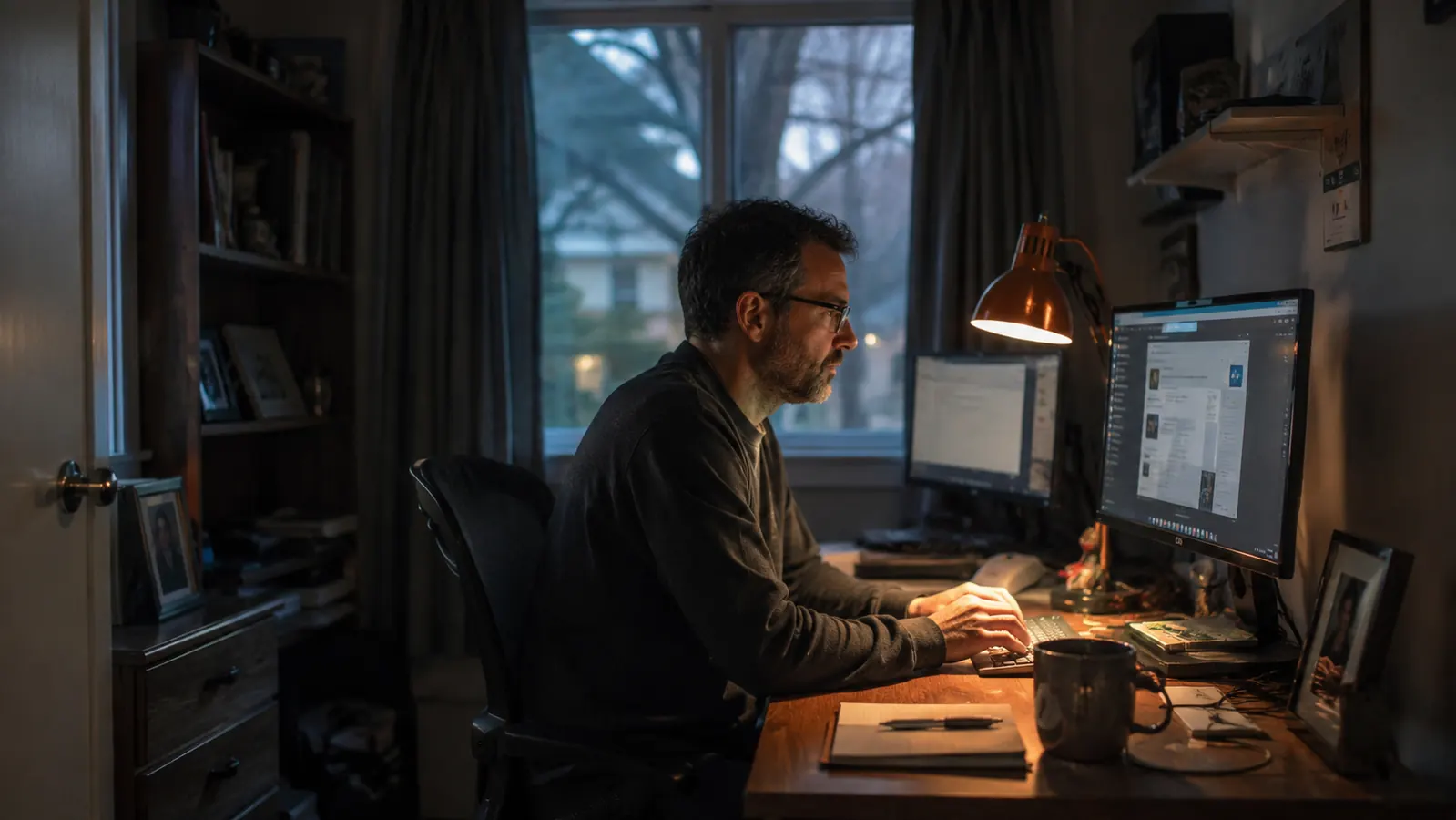
For about four years, my spare bedroom here in Boise turned into a different room after the sun went down. Same desk, same chair, same laptop, but the only light in it came from a single ceiling fixture that was already there when I moved in, probably original to whenever the house was built. It threw a flat, yellowish wash across the whole room and left the desk surface right under my monitor sitting in a dim gray zone. I did not think much about it until I noticed a pattern. Most days I was fine. Then somewhere around 7 or 8pm, once the sun was fully down and I was leaning into the last stretch of work, my head would start to ache. I eventually traced it to that one ceiling fixture and fixed it with a small clamp-on lamp called the Airlonv, but it took me embarrassingly long to get there.
It took me longer than it should have to connect the headaches to the room instead of the screen. I blamed dehydration. I blamed the mattress. I blamed drinking too much coffee too late. A friend of mine who works in facilities management for a school district finally said something that stuck with me. Overhead lighting is built to light a room, not a task, so your eyes end up working hard on a bright screen while the desk around it sits in shadow, and that contrast is what wears you down over a few hours, not the screen by itself. That was when I stopped ignoring it and bought an Airlonv LED desk lamp, mostly because it clamped to the desk edge instead of needing its own floor space I did not have.
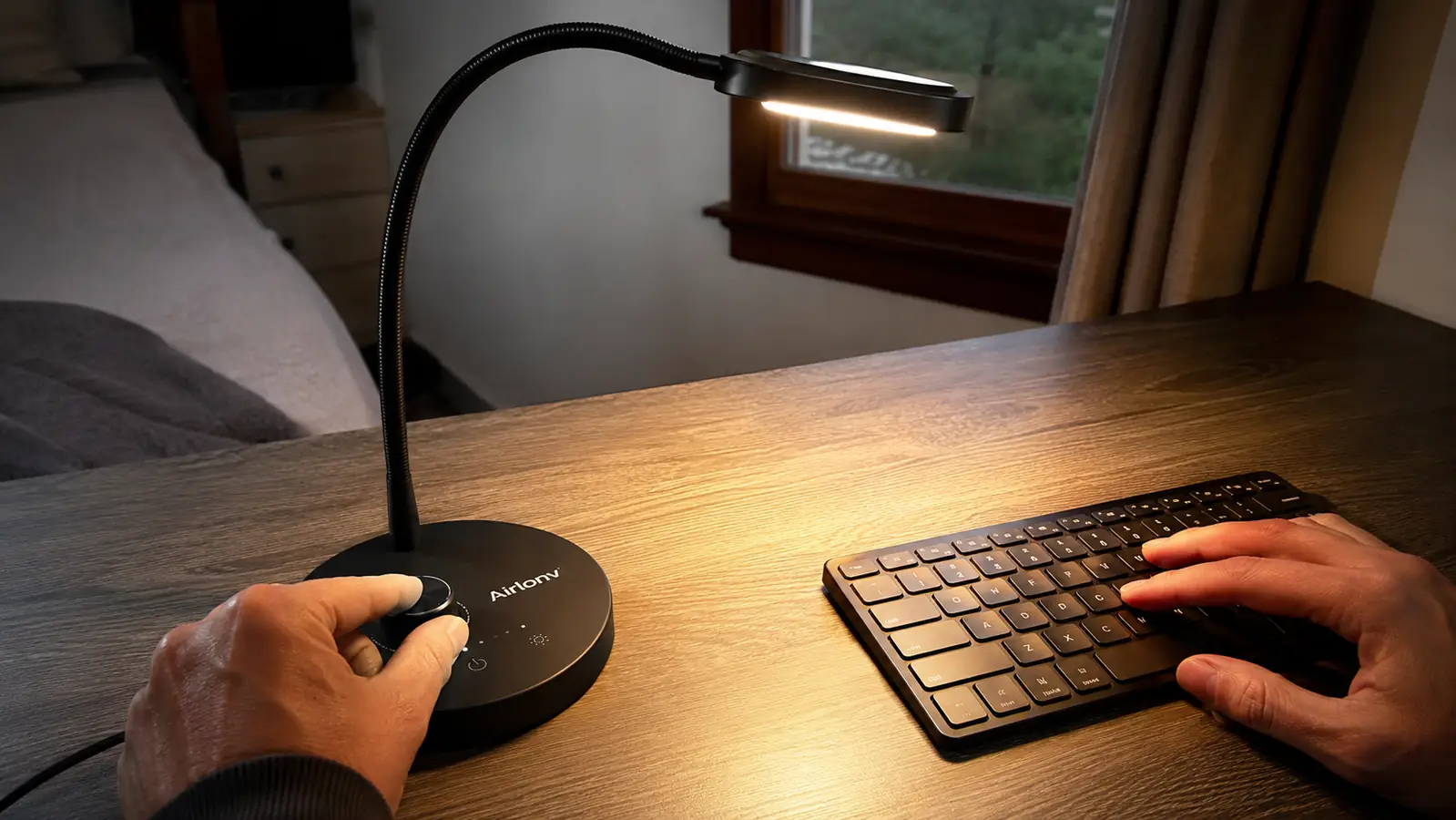
The clamp is what sold me before I even turned it on. My spare bedroom is small enough that a lamp with its own base would have eaten into the one clear stretch of desk I keep for paperwork, so clamping it to the back edge next to the monitor meant I gained light without losing space. It has a gooseneck arm long enough to reach over the keyboard, a touch dimmer, and a range that runs from a warm yellowish glow up to a cooler, whiter light, with steps in between. The first night I set it up, I aimed it down at the desk surface instead of my face and dialed the color temperature closer to daylight. I wrote up the full week-by-week version of that first stretch in my long-term review if you want more detail than a story can give you.
What surprised me was how fast the evening headaches backed off. Within the first week, the 7pm ache that had become routine just did not show up. I was not squinting at a dim keyboard anymore, and I was not straining against the glare where the ceiling light hit my monitor at an angle. The Airlonv lamp put even, direct light where I was actually working instead of where the room happened to need it. Working past dinner stopped feeling like something I had to push through and just became a normal part of the evening again.
I was not fixing my eyes. I was fixing the room.
Same desk, same screen, no ceiling light doing you any favors after dark?
Before you blame your eyes or your monitor, look at what your desk is actually lit by once the sun goes down. This is the exact lamp that changed my evenings, still clamped to the same spot on my desk months later.
Amazon Check Today's Price on Amazon →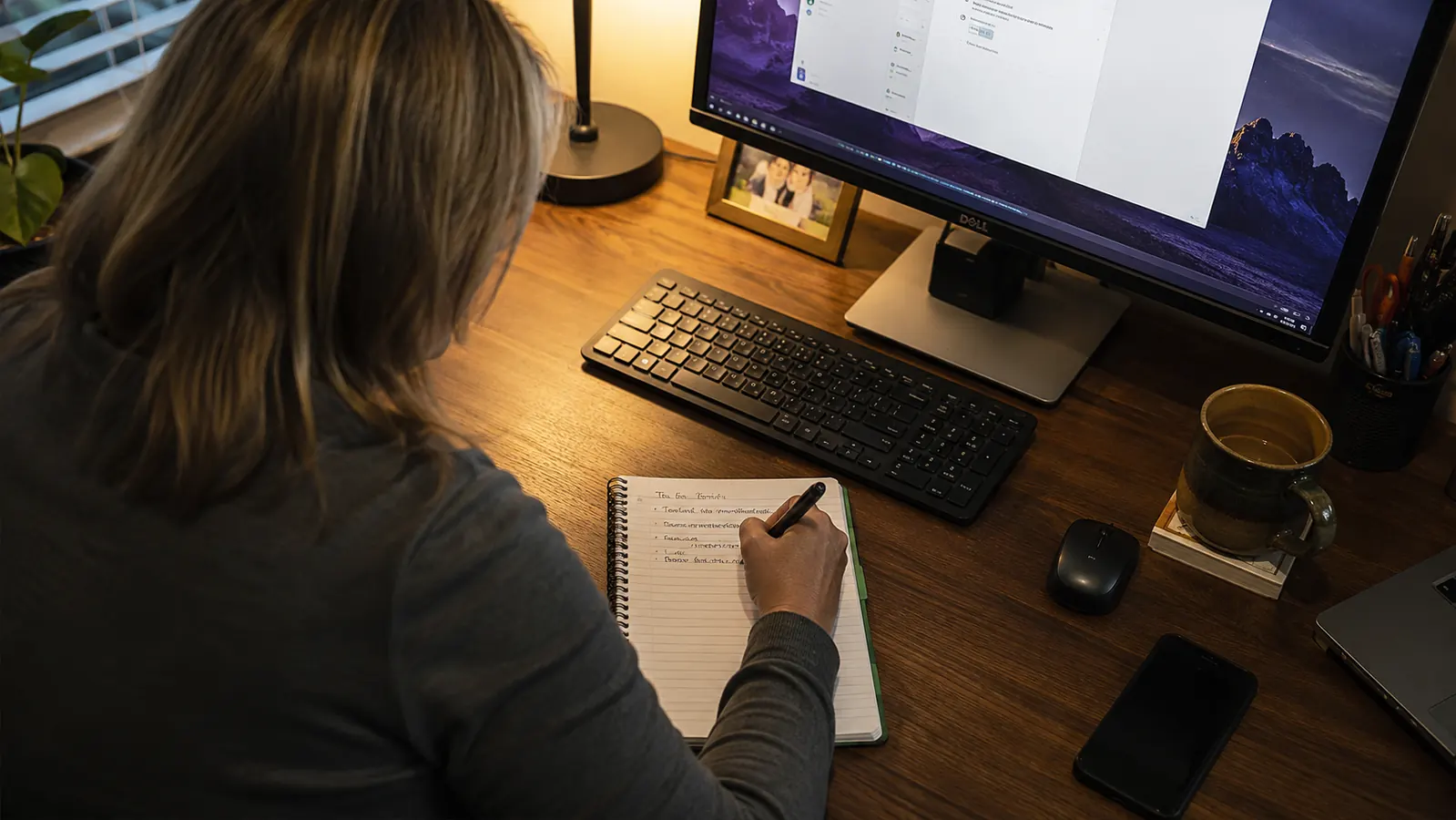
I settled on running it around 40 percent brightness most evenings, with the color temperature set closer to the warm side early on and nudged cooler as the night went on, which sounds fussy but takes about two seconds once you know your own preference. What it actually changed was the contrast between my screen and the desk around it. Before, my eyes were adjusting back and forth between a bright monitor and a dark desk every time I glanced at a notebook or reached for my coffee. With the lamp on, that gap closed, and closing it seems to be most of what stopped the headaches, more than any single brightness setting.
I will say the Airlonv is not fancy. The housing is lightweight plastic, not metal, and the clamp needs a desk edge under about two inches thick to grip well, so it will not work on every desk. The base of the clamp also takes up a little depth behind the monitor, and I had to route my cable carefully to keep it from turning into a mess back there. None of that changed how much it fixed the actual problem, but I laid out every tradeoff, including a couple I only noticed after a few months of daily use, in the honest review.
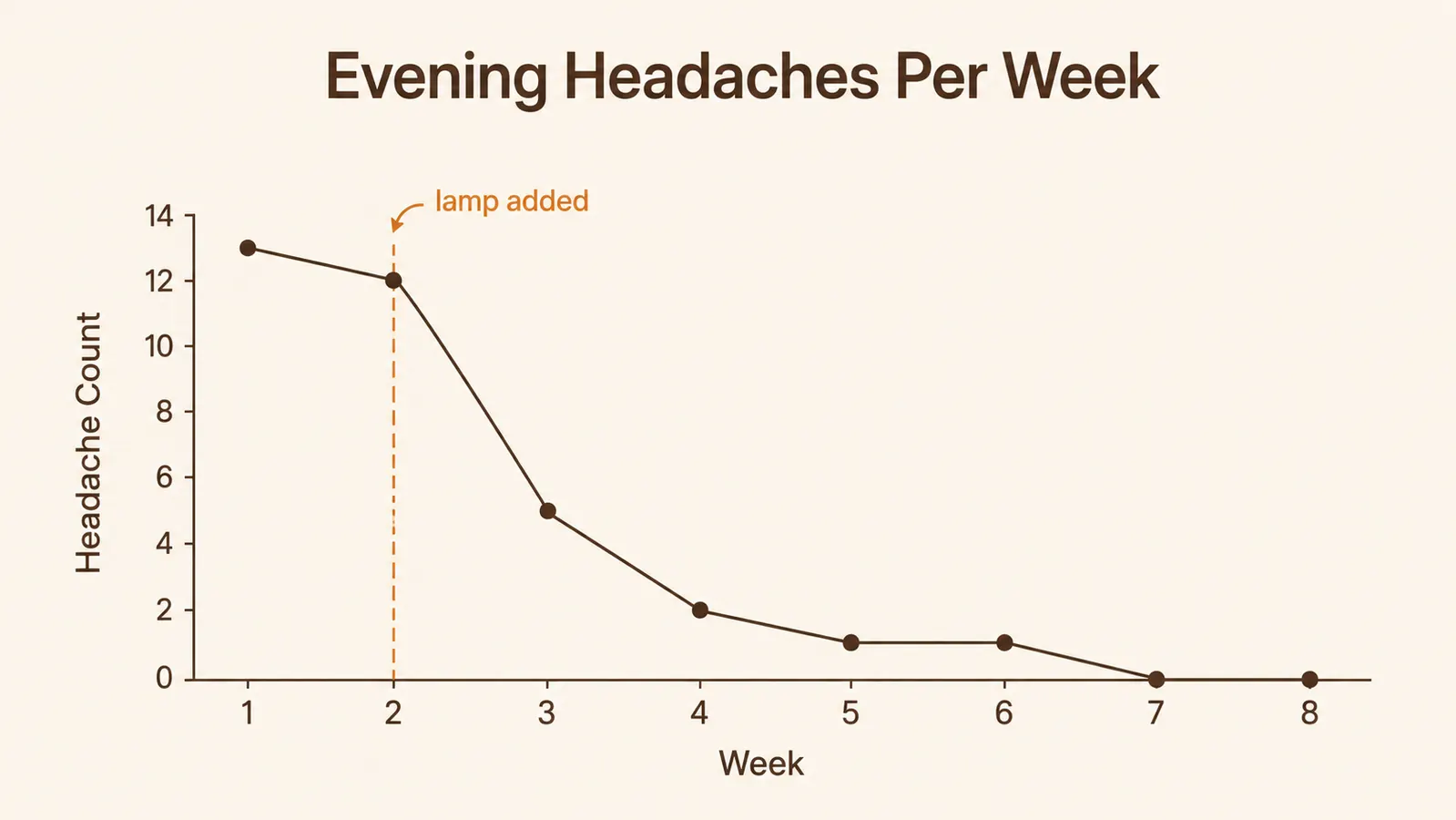
It has been most of a season now, working evenings in that same spare bedroom, and the pattern has not come back. I still get tired by 9 or 10pm the way anyone does after a full workday, but it is regular tiredness, not the specific ache that used to build behind my eyes once the sun went down. That alone told me the ceiling light, not my screen, had been the actual problem the whole time.
What I'd Tell You If We Were Sitting at My Kitchen Table
If we were sitting at my kitchen table and you told me your evenings end in a headache, I would not tell you a lamp fixes everything. It will not fix a mattress that is wrecking your sleep or a job that has you staring at a screen for eleven hours straight. But if the only light in your room after dark is one fixture overhead, and you notice the ache shows up specifically once the sun goes down, I would ask you to try lighting the actual desk before you assume it is your eyes or your screen. That was the one change that worked for me, and it turned out to be a lot simpler and cheaper than I expected going in.
Still working evenings under one tired ceiling light?
It took me four years to try the obvious fix. If your headaches show up after dark and not before, this is the lamp I clamped on and never took back off.
Amazon Check Today's Price on Amazon →