
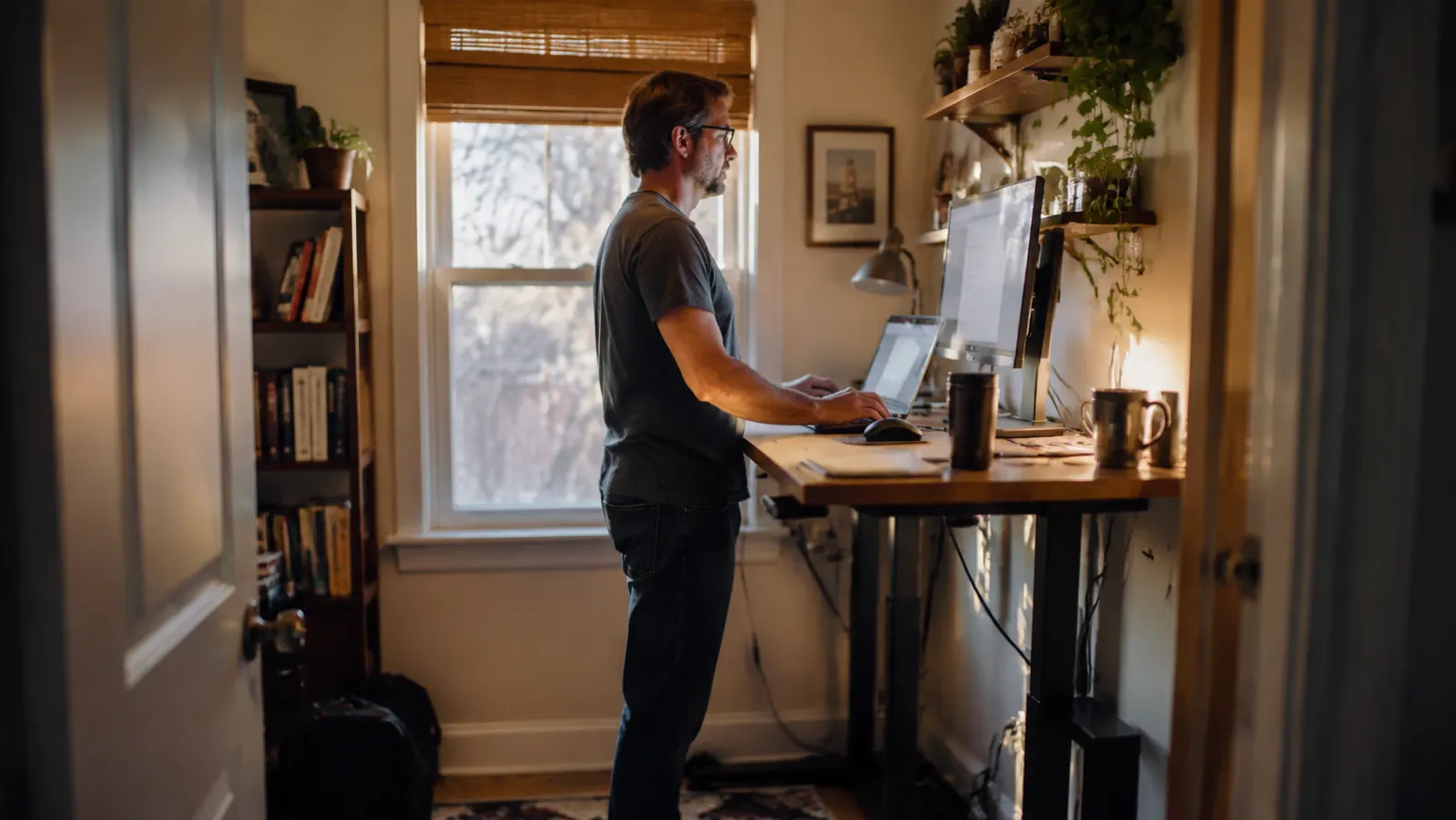
For about six years, I blamed the 3pm crash on lunch, then on coffee timing, then on Boise's dry air, then on getting older. What I never blamed was the desk. I write technical documentation for a living, no big adrenaline deadlines, just a steady grind of screens and specs, and for nine years I've worked out of a spare bedroom that used to be a nursery. Around 2:45 every afternoon, my brain just faded. Not tired exactly. Flat.
Six months ago I gave in and bought a FEZIBO standing desk, the 48 by 24 inch version with the splice board top, mostly out of desperation. I'd tried the second coffee, the walk around the block, pacing during Zoom calls when nobody could see below my shoulders anyway. None of it stuck, because none of it touched the real problem: I was sitting in the exact same position, at the exact same rickety desk, for six or seven hours a day, and my body had started treating the slump like a scheduled event.
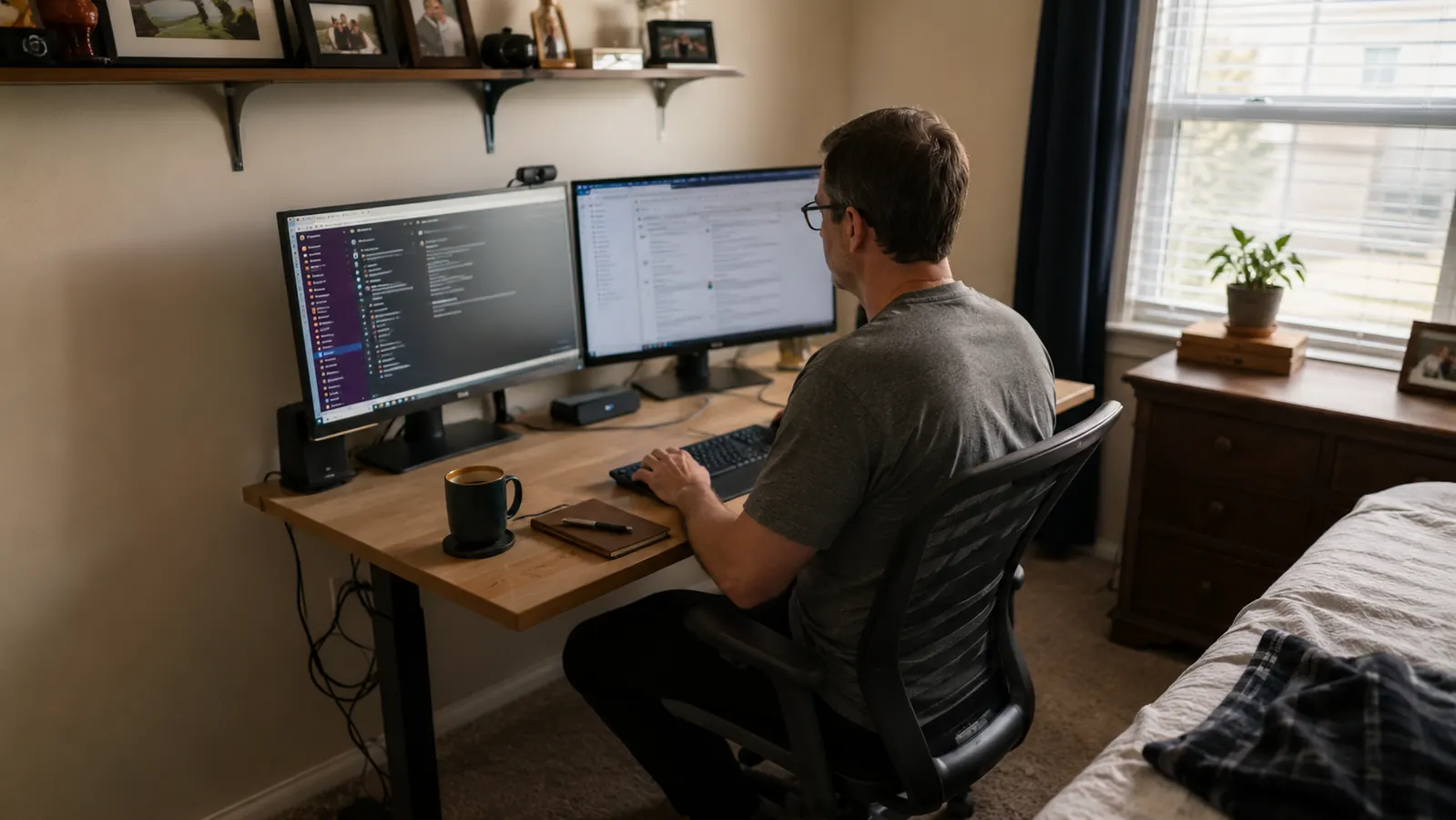
The desk I'd been using was a laminate particleboard piece I bought used off Craigslist when I first moved into this house. It had a wobble that got worse every year, the kind where your coffee mug leaves a ring because the whole surface shifts a little every time you type hard. Cables draped over the back edge in a tangle I'd stopped trying to untangle. There wasn't room to spread out a second monitor without everything feeling cramped. It was fine for a while. Then it wasn't, and my lower back started telling me about it around hour four of every workday.
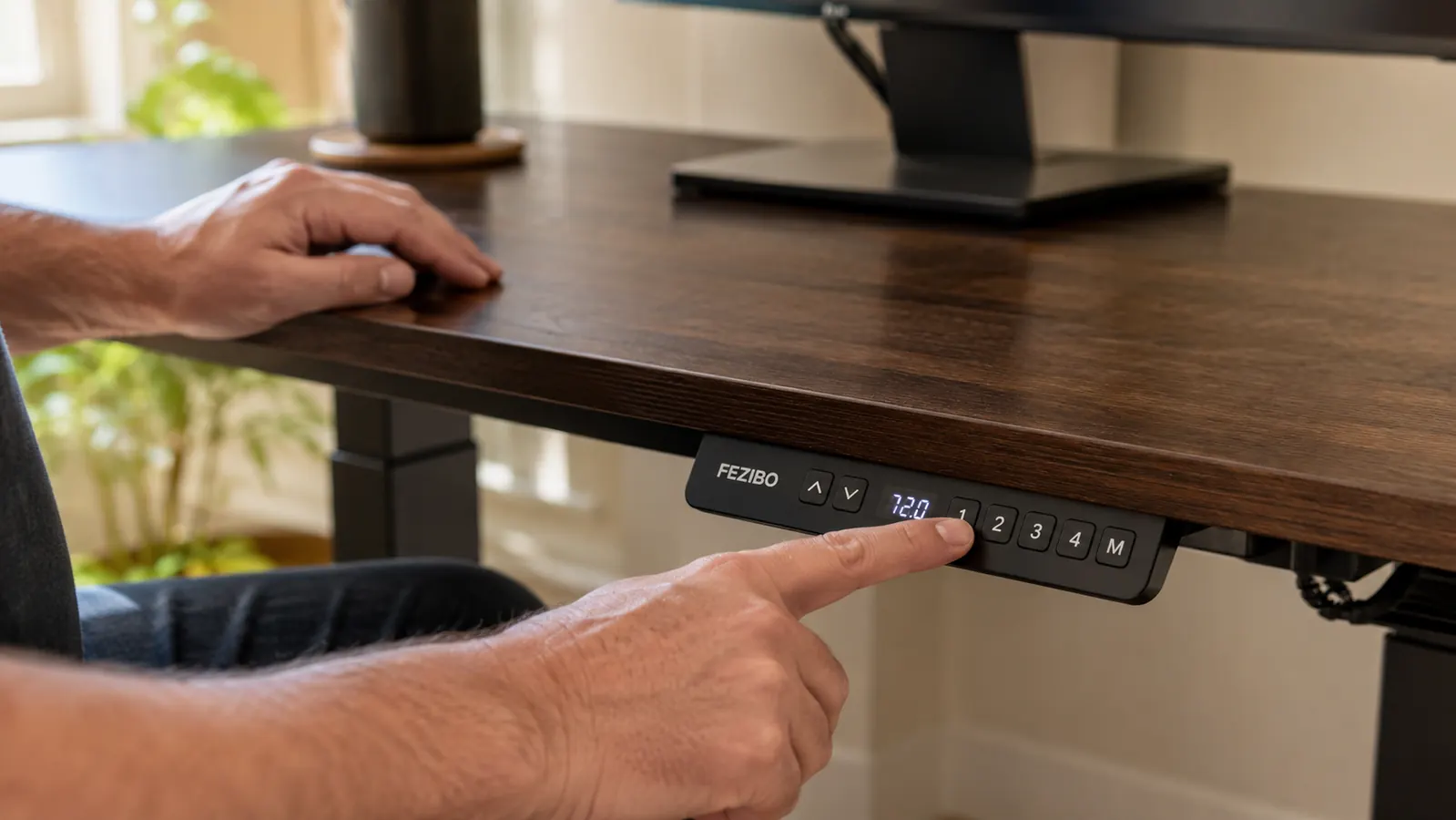
What actually sold me on the FEZIBO wasn't the standing part at first, it was the splice board top and the size. Forty eight inches wide, twenty four deep, enough room for two monitors and a notebook without anything hanging off the edge. It comes with three memory height presets, so I set one for sitting, one for standing, and one in between that I use around 4pm when my legs are tired but I'm not ready to sit back down. You tap a number, the desk moves itself, no fussing with a hand crank or guessing at a height that felt right last time.
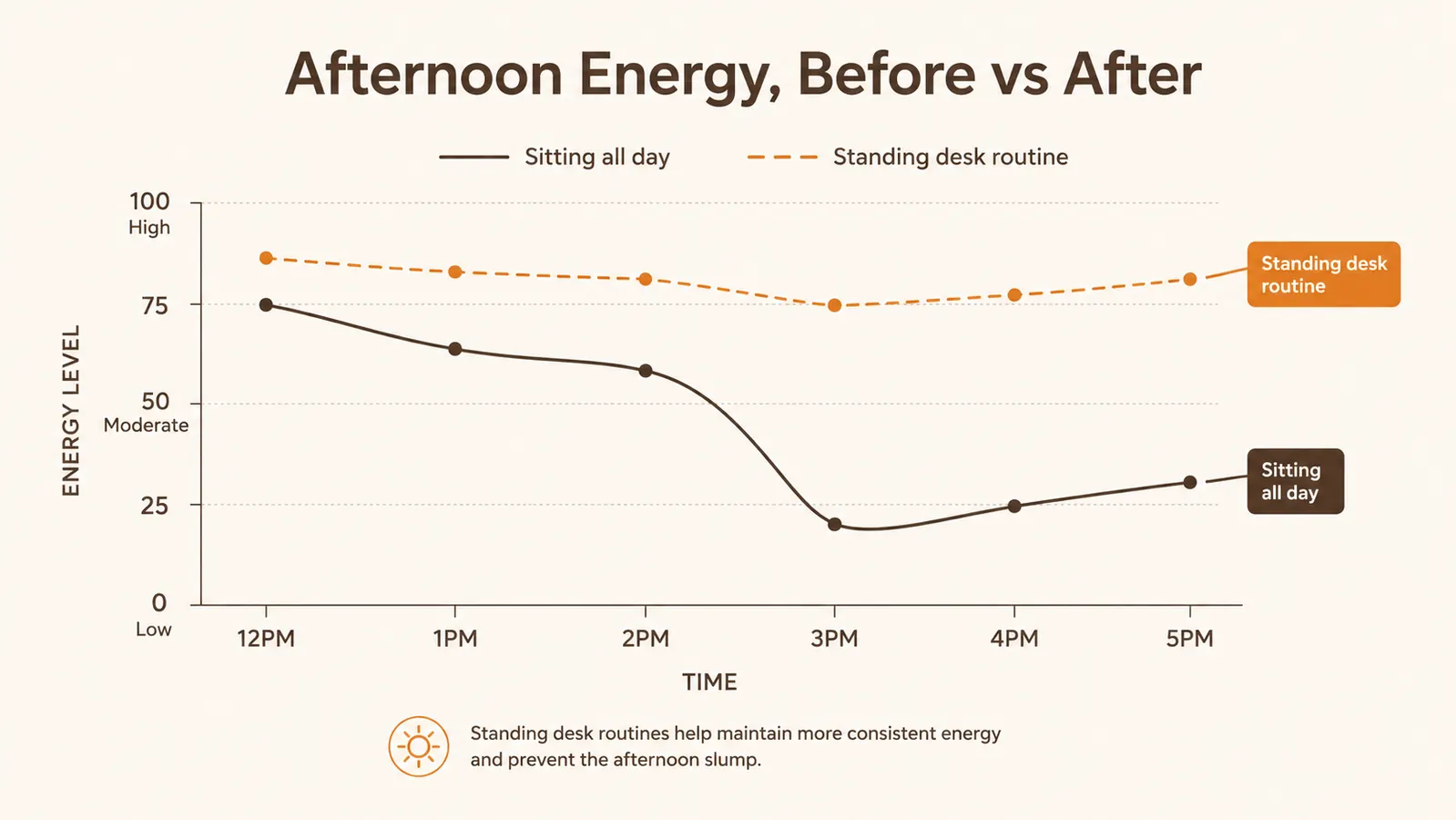
The first two weeks were rough, honestly. Standing for a full afternoon when your body isn't used to it is its own kind of tired, a different tired than the slump, but tired all the same. I started with thirty minutes standing and thirty sitting, then built up from there. By week three I was standing most mornings and switching to sitting after lunch, which is roughly the opposite of what I expected walking in, but it turns out my slump was a sitting problem, not an energy problem, and once I broke up the sitting the slump mostly broke up with it.
I didn't need more energy. I needed to stop sitting still for six hours and calling it discipline.
The 3pm Crash Isn't a Coffee Problem
Six months after switching to the FEZIBO standing desk, my afternoon slump stopped showing up on schedule. See today's price on the exact 48 x 24 inch splice board version I use.
Amazon See Today's Price on Amazon -> →Six months in, the 3pm crash still shows up now and then, usually on days I forget to switch positions, which tells me it was never really about willpower in the first place. It was about staying in one posture too long. My lower back, which used to ache by Thursday every single week, doesn't anymore. I still get up and walk around the block, that habit hasn't changed, but I'm not dragging myself through the last two hours of the workday the way I used to.
None of this means the FEZIBO is flawless, and I'd be lying if I told you otherwise. The motor has a low hum when it's moving, not loud, but noticeable in a quiet room during a call. Assembly took me about ninety minutes with a cordless drill, longer than I expected, and I had to snug a couple of bolts a week later once everything settled into place. The cable tray underneath helps a lot, but I still ran my own zip ties along the leg so nothing swings when the desk changes height.
If you want the full breakdown, the numbers I actually tracked and the exact preset heights I landed on, I wrote about that in more detail in my long-term review after six months of daily use. And if you're the type who wants the blunt pros and cons laid out before you spend a dime, I put that together separately in my honest review of what I'd change. This piece here is just the story of how I got from a wobbly Craigslist desk to where I am now.
What I'd Tell You If We Were Sitting at My Kitchen Table
If you're dealing with the same afternoon fade I was, and you've already tried the coffee and the walks and the sheer willpower, I'd tell you to look at how long you're sitting still before you look at anything else. A standing desk isn't magic, and it won't fix a workload that's genuinely too heavy or a schedule that never lets you breathe. But if part of your problem is six hours in one position in a spare bedroom that used to be something else, this was the cheapest fix I found that actually stuck. Start slow, thirty minutes at a time, and give it three weeks before you decide it isn't working. That's how long it took me.
If Your Afternoons Feel Like Mine Used To
The FEZIBO standing desk, memory presets, splice board top, and enough surface to stop feeling cramped, is the one change that actually stuck for me. Check today's price before you decide.
Amazon Check Today's Price on Amazon -> →